
Electric Fencing to Manage Horses’ Forage Intake Through Seasons
Agspand Pty Ltd, Australia, 2026
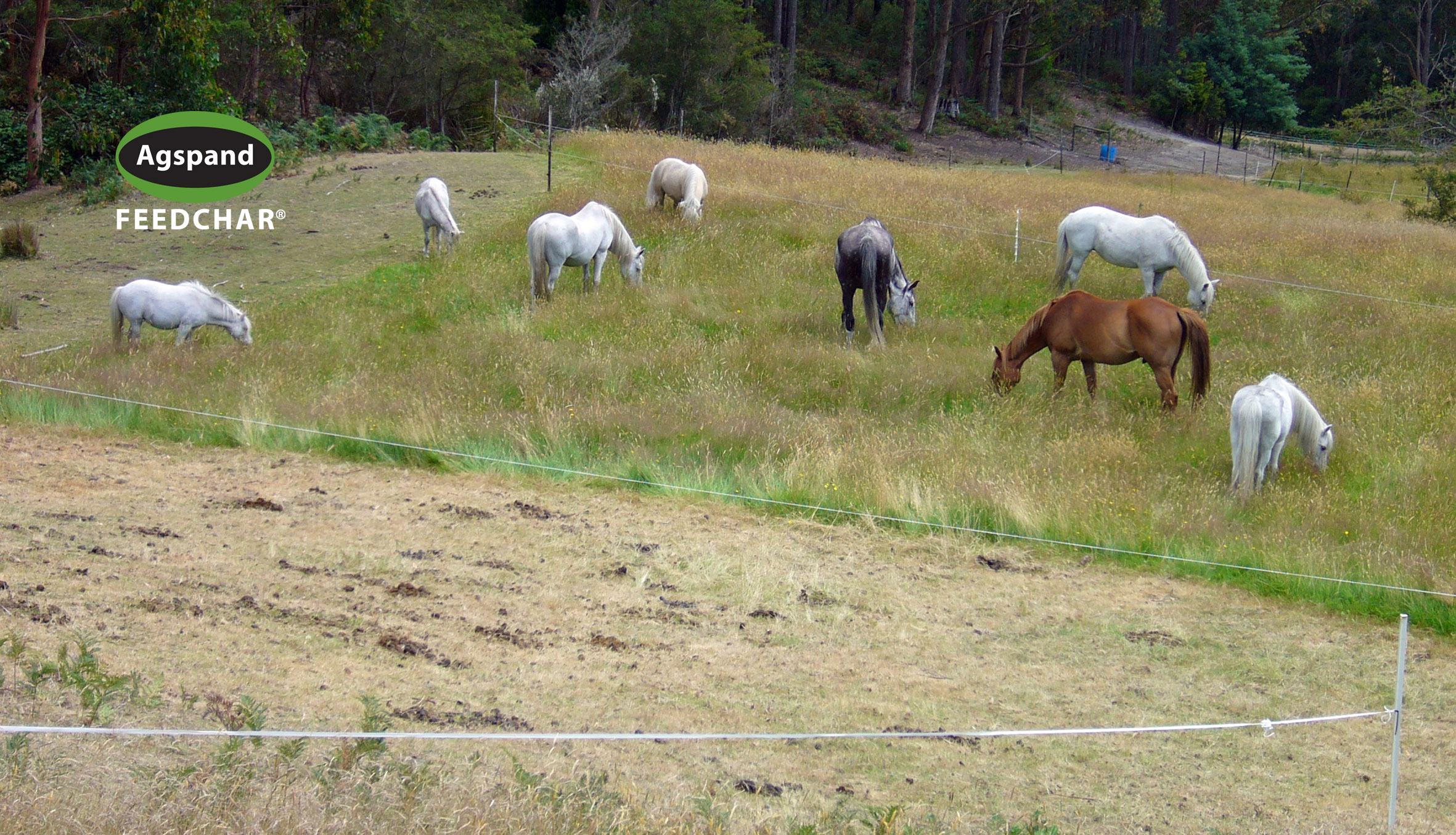
This article highlights some Key Benefits of a Track-and-Cell Electric Fencing Design for Rural Properties with Horses, including equines with laminitis and metabolic issues.
Agspand’s consultants have had several decades of experience with electric fencing systems and often make suggestions to property owners on the best set ups to manage their animal, soil and pasture health through different seasons, including periods of high and low rainfall.
An electrified perimeter track combined with internal strip-grazing cells is an ideal fencing system to provide multiple benefits for rural properties and their horses:
(a) keeping horses moving on the perimeter track by separating their daily needs-points such as shelter, food and water;
(b) rotating various interest points such as obstacles and feed stations on the track to stimulate interest;
(b) supporting horses’ emotional wellbeing by grazing together as a mob in smaller cells;
(c) managing animals’ seasonal intake of diverse forage for health maintenance and immunity;
(d) feeding the soils with nutritious animal manures and stimulating taller, diverse pasture species in cells instead of shorter, potent monocultures; and
(d) improving property safety by adding to a perimeter firebreak during dry seasons.
Ideally Perimeter Tracks surround acreages, but larger properties can also set aside Loop Track areas for seasonal animal management.
Longer perimeter track sections use permanent electric fencing and smaller internal cells use movable electric fencing for limited grazing.
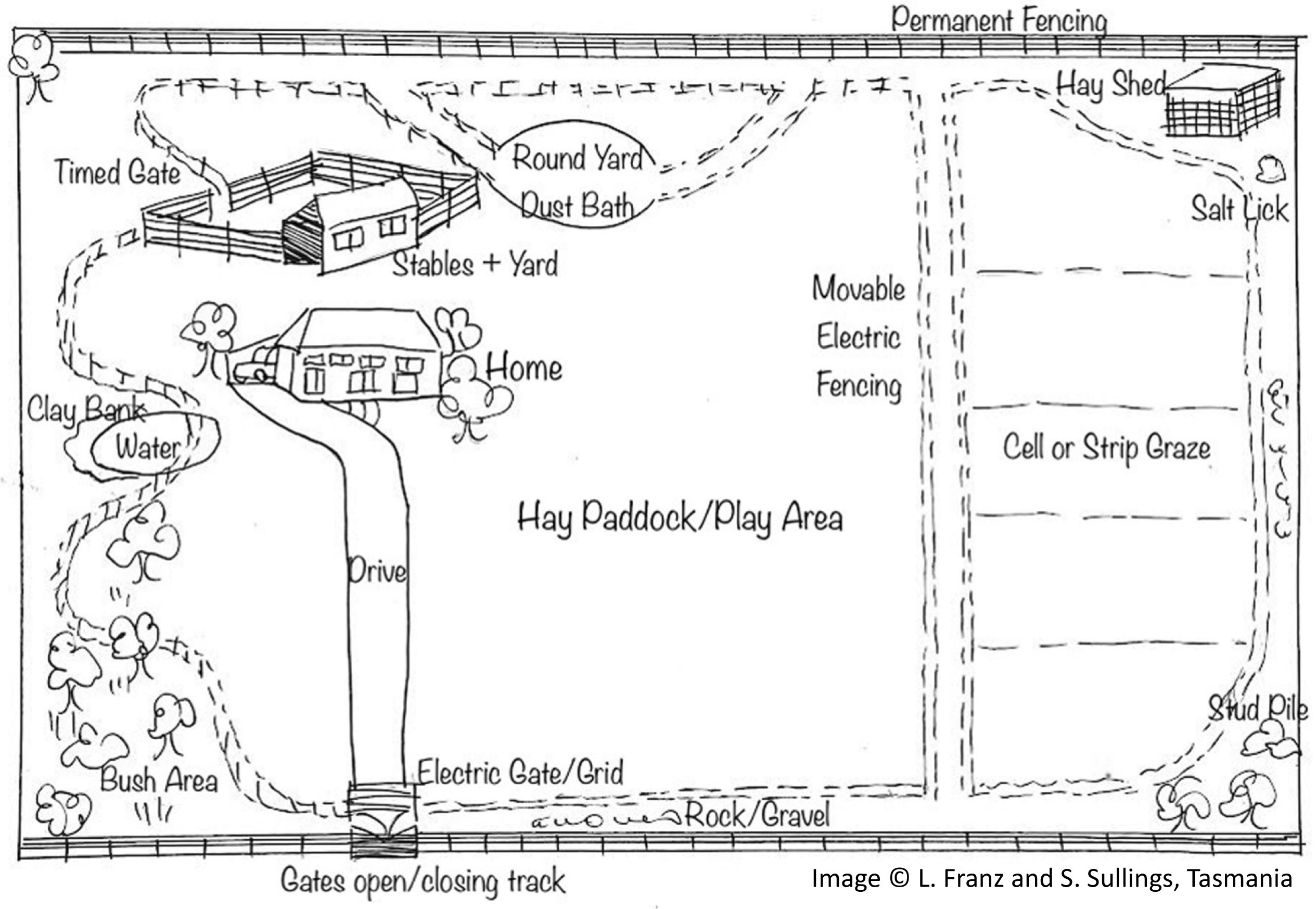
Sample design of an Electric Track-and-Cell Fencing System to manage horses on small rural properties. These systems encourage animal movement and the controlled grazing of diverse pasture through seasons, which may assist in raising long-term immunity for animals and reducing the risk of diet-related laminitis. The boundary perimeter fence in this article uses an Electrified 7-Wire Permanent Fence, while the internal cells use Electrified Single-Wire Temporary Fencing.
A perimeter or loop-track system is inspired by the behaviour of roaming animals who create dedicated tracks when moving across landscapes to access a diversity of food, water and gut balancers freely available in their environment such as mineral clays and charcoal from past bushfires. Natural clays and organic charcoal are ingredients animals seek themselves in the wild to help balance their gut pH against seasonally occurring plant potencies, which include mycotoxins and weeds. Gut pH balance is needed for nutrition access to maintain healthy condition.
A perimeter-track and internal-cell system allows horses to move together as herding animals, as well as provide separate personal space if they desire it. Animals may experience less stress by staying together, not being left alone, finding shelter spots and interest points on the track. A lack of movement, stimulation and companionship can cause animals stress, which contributes to illness.
Limiting animals’ access to diverse, fresh forage by grazing one small internal cell at a time adds to their gut balance and longer-term immunity. Immunity means supporting the body’s protective fortresses such as healthy skin, coat and feet to resist illness and pathogen invasion, which can be particularly opportunistic during wet seasons.
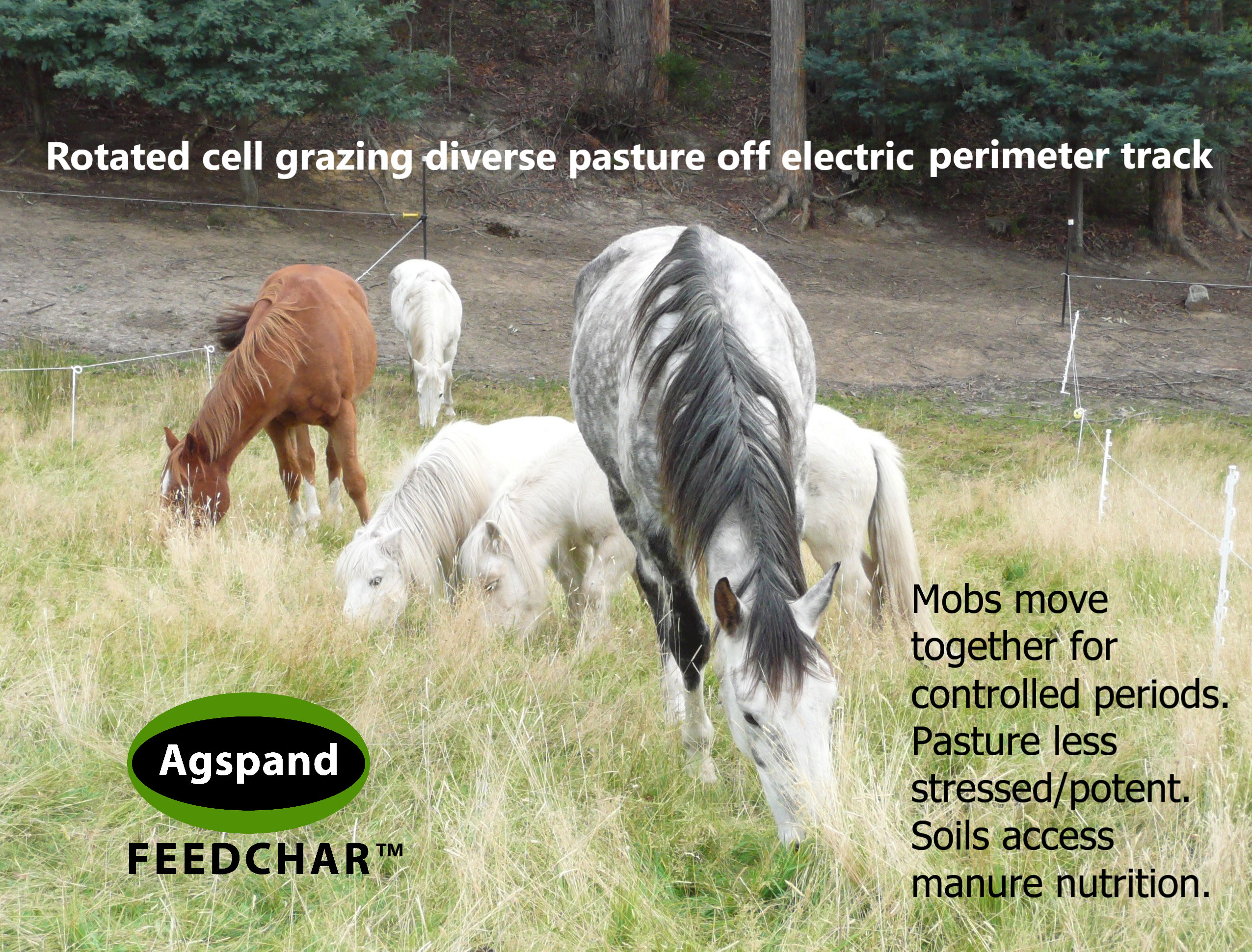
When we see livestock illnesses such as poor coat and feet problems like greasy heel and laminitis, there is a weakening of these “immune fortresses”. Diet diversity for gut balance is key to supporting immunity, which includes sufficient high-fibre food in taller, fresh forage, as well as prebiotic fibre supplements such as feed-grade charcoal and higher-NDF hay, etc.
Taller grasses may contain more fibre and less nutrition than new or shorter grasses. Rotating animals through small, internal cells for limited periods at certain times of the day (e.g. a few hours early morning) can control the amount of higher-fibre, lower-sugar forage they consume while still accessing the essential vitamins and minerals that fresh forage provides.
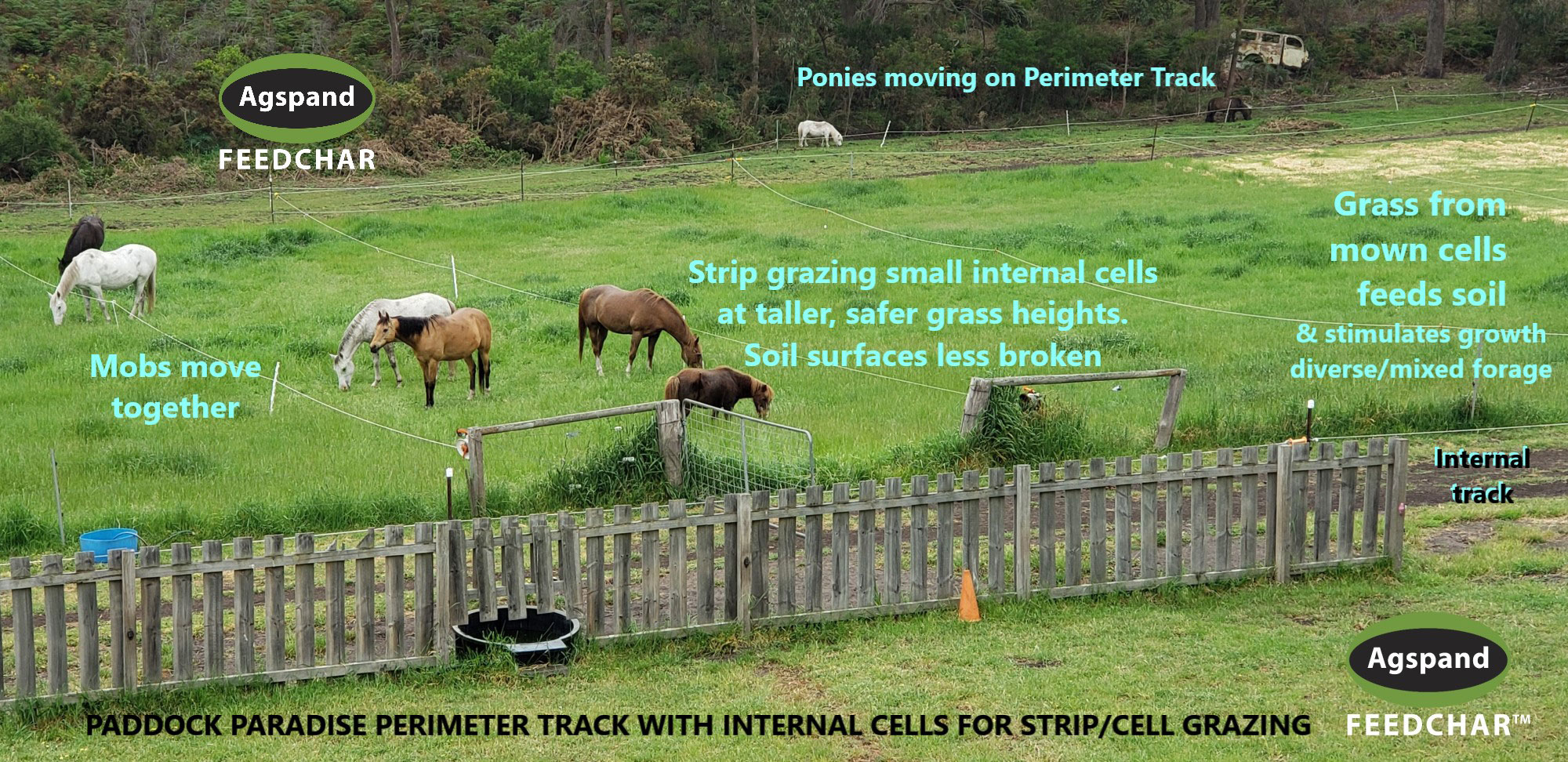
Taller grasses also have less worm burden because their larvae usually reside below the shorter 6 cm grass heights. Less drenching in turn reduces the potential negative impact of wormers on soil fauna such as earthworms or dung beetles, whose populations build soil porosity, soil nutrition and water storage for longer-term drought resilience.
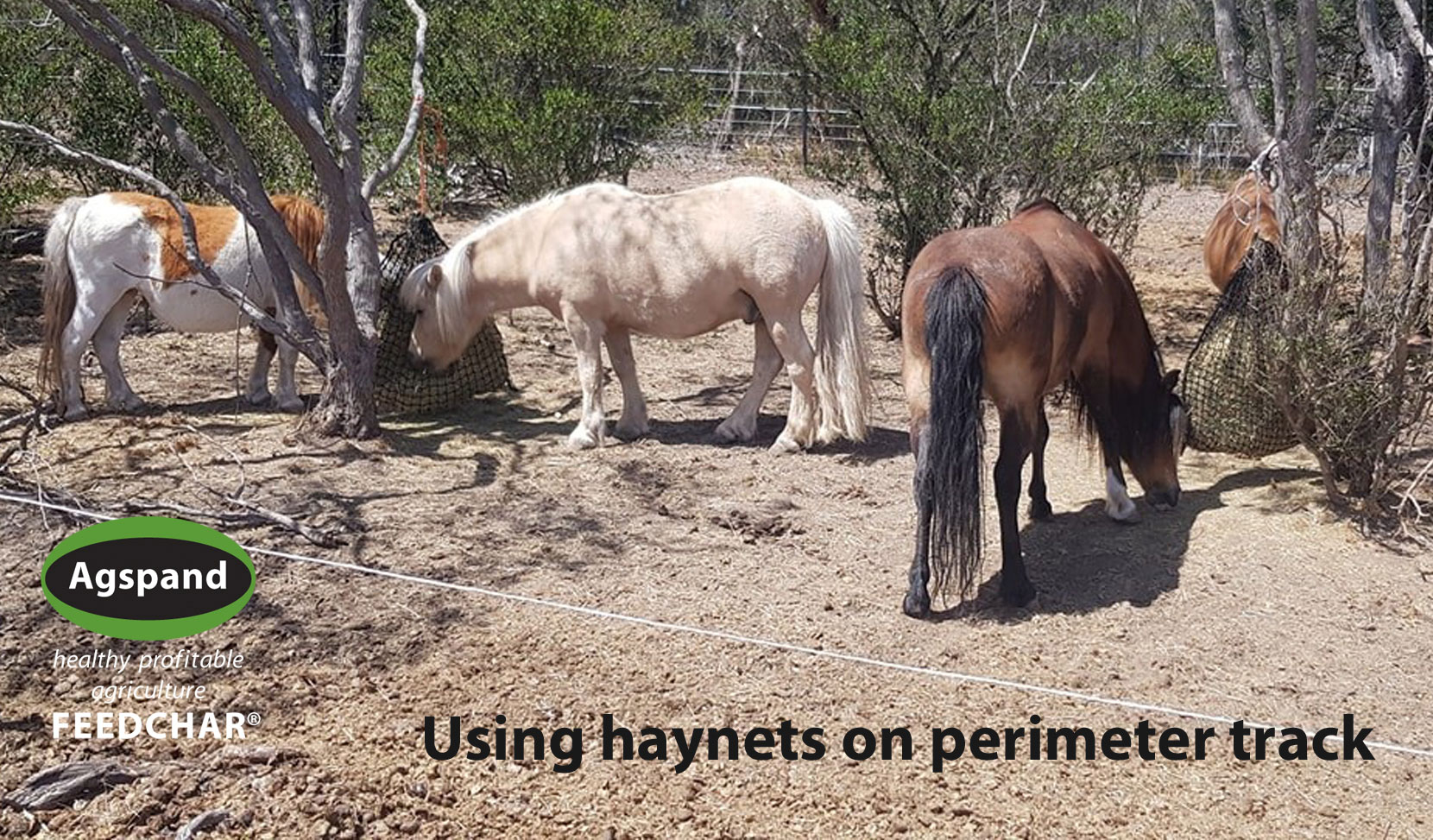
Pastures that emerge after dry spells may be high not only in sugars but also nitrates and potassium, for example, which can affect gut balance. When the seasons change or a drought breaks, the perimeter track with little vegetation remains a safer area to manage animals with hay nets until these emerging pastures are better established, less stressed, and less potent.
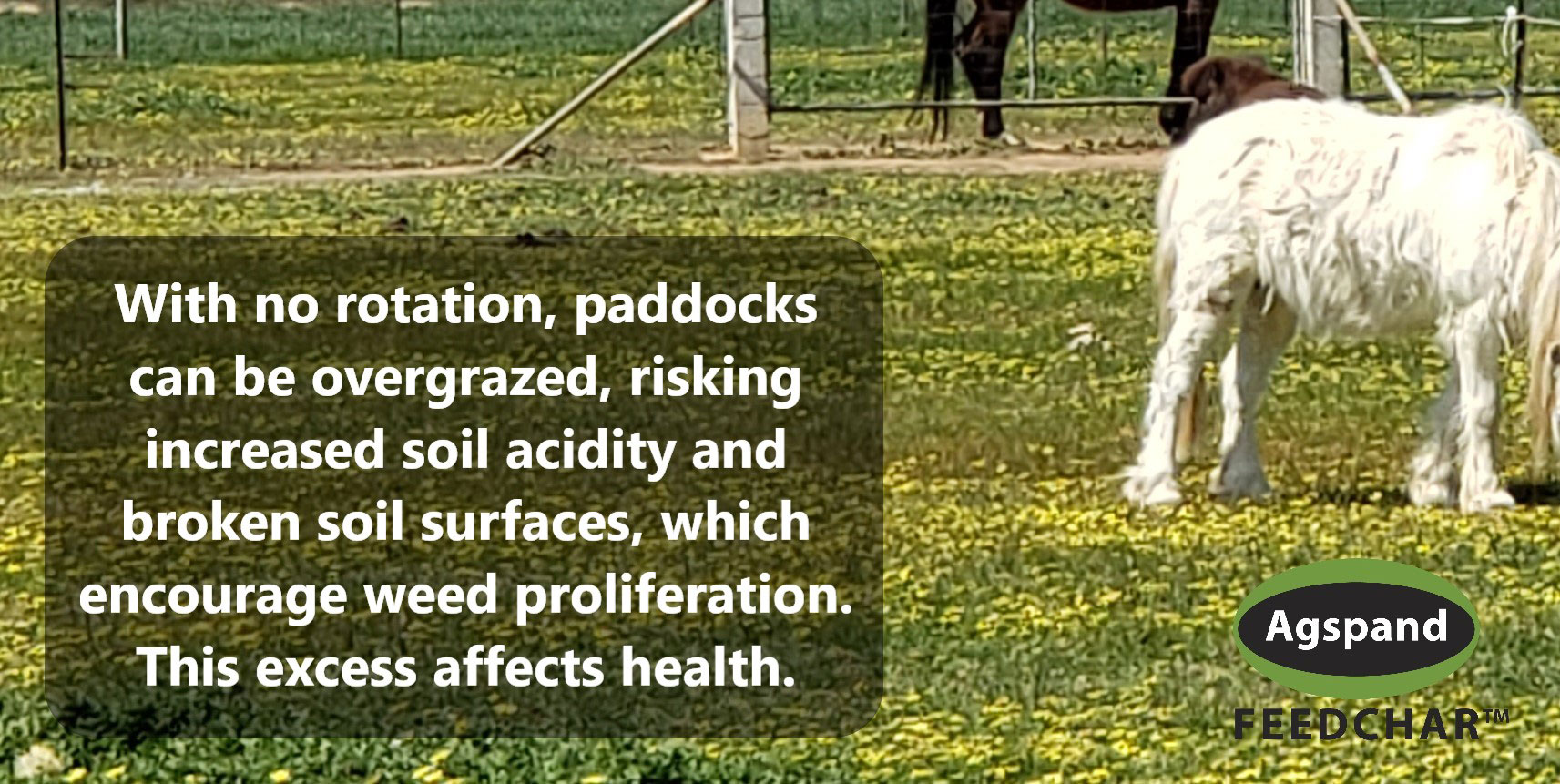
The alternative of keeping animals on the same paddock and not rotating them means any short, overgrazed grass can be stressed trying to grow and hence be more potent with, for example, self-protecting mycotoxins. Soil surfaces can break up, allowing plants such as dandelion or capeweed to dominate, which again creates gut imbalances from a lack of feed diversity. Rotating grazing animals promotes grass growth and builds pasture-plant diversity, supporting animal immunity.
When feeding hay, add multiple, smaller piles around the track so that the horses can move from pile to pile; this way the dominant animals are not able to lord over one big pile.
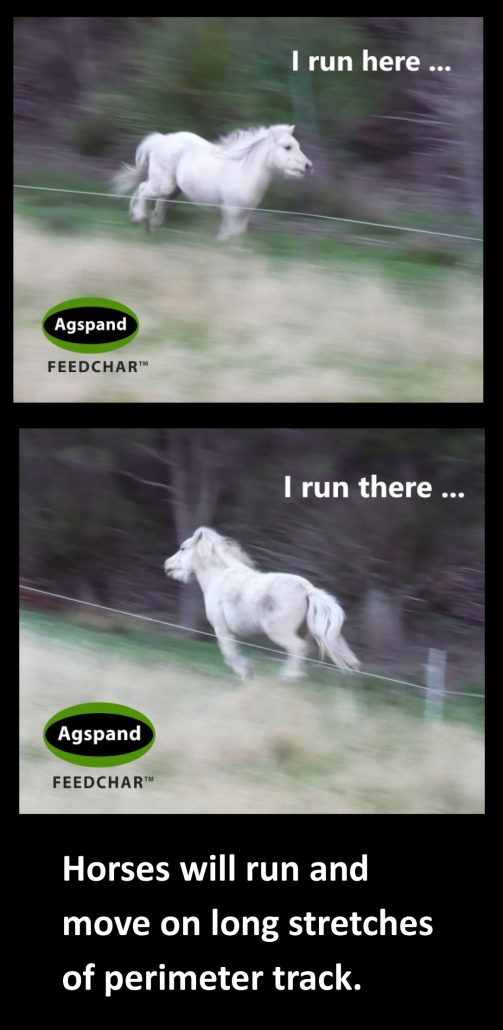
Longer stretches of perimeter track allow horses and ponies space for continual daily movement, space to have some time apart if needed, but also to run and exercise. Shorter track sections can include logs or gravel obstacles for spatial awareness or dust baths, walls and hedges for windbreaks, and trees for shade and shelter.
On a perimeter track, horses often create stud piles of manure in certain spots, making it easier to collect and compost. Meanwhile, manures deposited in cells may be left on the ground because the animals are in one cell for only a short period of time before being moved to the next cell. This remaining manure — which also contains some prebiotic charcoal from FEEDCHAR® supplementation — increases the soil’s carbon, nitrogen and water stores, which in turn feed the living soil biome to stimulate healthy, diverse forage for grazing animals.
During seasons of abundant forage, internal cells not being grazed can be mulched and the mown grass will break down and again feed the soils.
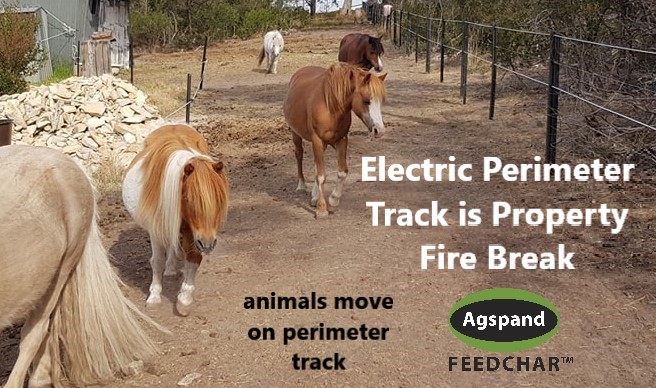
During dry seasons, a well-trodden perimeter track with less fuel load creates a fire break around the property, adding to an overall bush fire plan.
Track-and-cell electric fencing systems are economical ways of managing healthy animals and pastures through seasons, along with supplementing prebiotic-fibre FEEDCHAR® loose lick, an Australian certified minerals-plus-charcoal gut balancer and broad-spectrum toxin binder.
Ask for Agspand’s FEEDCHAR® and electric fencing gear from your local Australian stockist, listed at www.agspand.com.au.
Text and Images Copyright Agspand Pty Ltd Australia, www.agspand.com.au.
Acknowledgement Grateful appreciation goes to Equine Podiatrist and Experienced Rehabilitator Libby Franz for allowing us permission to photograph her properties and sharing her caring expertise with us for many years.
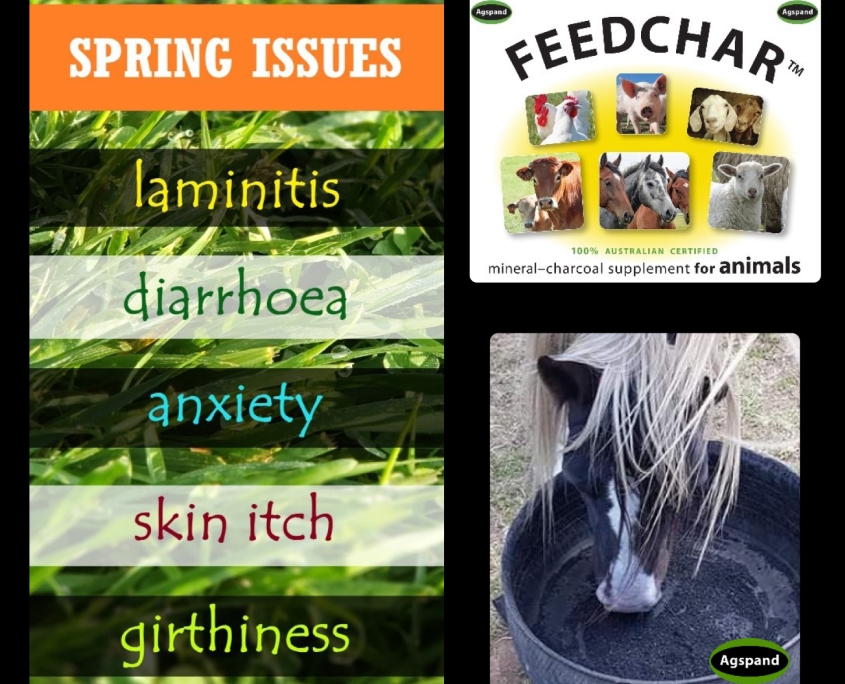
Agspand’s FEEDCHAR® for horses and farm animals combines feed-grade Minerals plus Charcoal together in the gut to buffer acidosis and support the beneficial gut microbiome for effective digestion through seasons. With gut balance, nutrition is accessed. Ask your local stockist.


